
Generator platforms and stairs solutions should make servicing equipment easier, not create another obstacle for a maintenance crew to work around. Commercial generators can be large, elevated, surrounded by equipment, or positioned so that important controls and service areas are difficult to reach from ground level.
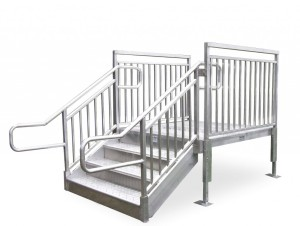
REDD Team manufactures aluminum access systems that can be configured around generators and other industrial equipment. Stairs, landings, extended platforms, guardrails, and custom layouts give technicians a defined way to reach the places where inspections and maintenance actually happen.
Why Do Commercial Generators Need Dedicated Access?
Generators are built to keep critical systems operating, but they still need regular attention.
A technician may need to inspect fluid levels, replace filters, open service panels, test controls, or troubleshoot a problem. If those areas sit several feet above grade, simply getting to them can become part of the job.
Permanent stairs and platforms remove much of that guesswork. Instead of bringing in temporary steps or finding another way to reach an elevated panel, workers have a consistent access route waiting for them.
That becomes particularly valuable at facilities where generator inspections happen frequently.
What Should a Generator Access Platform Include?
There isn’t one configuration that works for every generator installation.
Some sites only need a short stair system and landing. Others require an extended platform running alongside the generator so workers can reach several service points without repeatedly climbing up and down.
Depending on the project, an access system may include:
- Aluminum stairs
- Work platforms
- Intermediate landings
- Guardrails
- Handrails
- Extended walkways
- Multiple points of access
- Custom platform dimensions
The right layout starts with the generator itself. Where are its controls? Which doors need to open? Where will technicians stand while working?
Those practical questions are just as important as the height of the equipment.
Why Is Working Space Around a Generator Important?
Reaching a generator and being able to work on it are two different things.
A technician carrying tools or replacement parts needs more than a place to put one foot. There should be enough usable space to stand, turn, open equipment panels, and perform necessary service tasks.
An extended platform can create that working area beside the generator.
Thinking about clearance beforehand also helps prevent a common problem: installing an access system that technically reaches the equipment but interferes with a door, panel, or component that needs to be removed later.
Good access planning considers the work that will happen after installation.
Why Does REDD Team Use Aluminum for Generator Platforms and Stairs?
Generator access systems are often installed outdoors, where materials are exposed to rain, moisture, temperature changes, and other environmental conditions.
Aluminum is well suited for that setting. It naturally resists corrosion and does not need the same level of protective coating or ongoing maintenance associated with many steel structures.
Weight is another advantage.
Aluminum is considerably lighter than steel while still providing the structural strength needed for demanding access applications. Lighter components are easier to transport and position during installation, particularly when the generator is already in place and working space is limited.
The result is an access system that is durable without being unnecessarily cumbersome.
Can Generator Platforms Be Customized for an Existing Installation?
Yes, and existing installations are often where customization matters most.
The ideal time to think about equipment access is during the original site design, but real facilities aren’t always that simple. A generator may already be surrounded by fencing, piping, electrical equipment, concrete pads, tanks, walls, or other structures.
Moving the generator may not be practical.
Instead, the stairs and platform can be designed around the space that is available. REDD Team offers custom engineering and design capabilities for applications where a standard stair or platform arrangement will not fit the site.
That can include adjusting platform length, stair placement, elevation, and other elements to create a workable route to the equipment.
Can Generator Platforms Be Self-Supporting?
Some installations call for an independent structure, while others may allow the access system to connect with an existing tank or structure.
REDD Team can manufacture self-supporting generator platforms as well as systems engineered for mounting to tanks.
Which approach makes sense depends on the equipment, available space, site conditions, and structural requirements.
A self-supporting system can be especially useful when attaching directly to the equipment is undesirable. It provides access while allowing the platform to remain structurally independent of the generator itself.
How Can Generator Stairs Help During Routine Maintenance?
Routine maintenance gets easier when employees know exactly how they will approach the equipment.
Think about something as ordinary as carrying a toolbox to a generator control panel. Temporary access may require a worker to climb while handling equipment, move a portable stair into place, or make multiple trips.
A permanent stair and platform system creates a repeatable route.
Workers can use the same steps, handrails, and platform during inspections, scheduled service, and unexpected repairs. That consistency can also help facilities establish clearer maintenance procedures.
The platform isn’t doing the maintenance, of course. It simply makes getting into position far less complicated.
What Happens When a Generator Is Replaced?
Generators don’t last forever, and replacement equipment may have different dimensions or service locations.
That possibility is worth considering when an access system is designed.
Mechanically assembled aluminum components can offer more flexibility than some permanently site-built alternatives. Depending on the original system and the new equipment, components may be easier to modify, relocate, or reconfigure.
Planning for tomorrow doesn’t mean guessing exactly which generator a facility will buy 15 years from now. It means avoiding an access design that makes future changes unnecessarily difficult.
Are Aluminum Generator Platforms Difficult to Maintain?
One of the advantages of aluminum is how little attention the material itself generally requires.
There is no wood to rot, and aluminum’s natural corrosion resistance helps it perform well in outdoor environments. That makes it a practical choice for a structure that could remain exposed throughout the year.
Facilities should still inspect stairs, platforms, fasteners, handrails, and walking surfaces as part of their normal safety and maintenance procedures.
The difference is that the material isn’t creating a long maintenance list of its own.
What Should You Consider Before Ordering Generator Stairs and Platforms?
Start by looking at the generator through the eyes of the person who will service it.
Where will that person approach? How high are the controls? Which panels open outward? Is there enough space to carry tools? Are there pipes, fences, tanks, or other obstacles nearby?
Also consider:
- Required platform height and length
- Stair location
- Service clearance
- Handrail and guardrail needs
- Walking and working surface requirements
- Structural loads
- Applicable safety and building requirements
- Future equipment replacement
A few extra measurements and questions during the planning stage can prevent an inconvenient access layout later.
Where Can You Find Generator Platforms and Stairs Solutions?
When workers need to inspect or repair a generator, access should already be in place. They shouldn’t have to invent a way to reach important controls every time service is required.
REDD Team designs and manufactures generator platforms and stairs solutions for commercial, industrial, utility, and other demanding applications. Aluminum construction provides a combination of strength, corrosion resistance, lighter weight, and low maintenance, while custom design capabilities make it possible to address challenging equipment layouts.
Need stairs, a work platform, or a complete access system for your generator installation? Call REDD Team at (800) 648-3696 or contact us online to discuss your equipment, site layout, and access requirements.