
Construction sites are constantly changing and evolving to better meet the needs of their workers and jobsite. With so much change, one thing must stay consistent, and that is providing your workers with safe access when they’re working. Construction site entry ramps for worker safety and compliance play a critical role in keeping crews safe and moving efficiently.
Too often, access points are treated as temporary or secondary things on a jobsite. A quick fix access gets installed just to “get by.” Sadly, it then stays in place for too long. That’s where problems start for everyone involved. Poor access leads to slowdowns, injuries, and potential compliance issues that can ultimately cost you money. A properly designed entry ramp solves those problems before they ever become a headache.
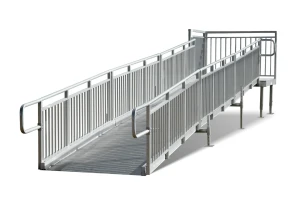
Entry Ramps on a Jobsite
Every worker on site needs to move safely from one level to another. That might mean that they’ll be stepping into a trailer, accessing a platform, or transitioning between uneven ground and a structure. Without a proper ramp, workers are left climbing, jumping, or improvising on how to get there, which all dramatically increases the risk of slips, trips, and falls.
Entry ramps create a controlled, predictable path that’s safe for your workers and visitors. Instead of relying on makeshift solutions, crews have a stable surface designed for repeated use that they can use with confidence. That consistency makes a difference, especially on busy sites where multiple trades are moving through the same access points all day, and you want to ensure things keep flowing safely.
Ensuring Compliance
You know that your construction site is subject to very strict guidelines when it comes to access, so it’s imperative that you adhere. Entry ramps help support your goal of compliance by providing a defined access point that meets slope and stability expectations. When properly installed, the ramps help your jobsite meet OSHA requirements related to walking-working surfaces and safe access to elevated areas.
REDD Team ramps are designed to meet OSHA standards. They provide peace of mind, especially on larger or more regulated projects.
Choosing the Right Ramp
One thing to remember is that not all ramps are created equal. The right solution depends on the specific needs of the jobsite.
Consider factors like height, load requirements, and frequency of use when picking a ramp. A ramp used for daily worker access needs to be more durable and stable than one used only occasionally. Surface conditions also matter. Sites exposed to rain, mud, or heavy traffic require ramps that can maintain traction under those conditions.
Material choice plays a role in your ramp choice as well. Aluminum ramps are popular because they are lightweight, durable, and resistant to corrosion. They’re easy to move and can handle the demands of most construction environments.
Planning for Access Early
One of the most effective ways to improve safety and compliance is to plan for access from the start of the job. Entry ramps shouldn’t be an afterthought; instead, they should be part of the initial site setup from day one.
By identifying key access points early, contractors can install ramps where they’ll have the most impact on their workers. This reduces the need for temporary fixes and helps establish safe habits from the start.
Creating Safer Job Sites
Construction site entry ramps for worker safety and compliance are a simple solution to a complex challenge. They address safety, efficiency, and regulatory concerns all at once. At the end of the day, safe access isn’t optional. It’s essential. And investing in the right ramp system is one of the easiest ways to improve both safety and performance on any job site. For more information or to find the right solution for your needs, contact REDD Team at (800) 648-3696 or reach out online to get started.