
If you’re planning upgrades at a school, clinic, or office, the first question usually isn’t “stairs or no stairs?” Instead, the question is which material will serve you best. Comparing aluminum vs steel stairs for outdoor accessibility projects comes down to speed, safety, and how much maintenance you want later.
Here’s the quick take on aluminum vs steel stairs:
- Aluminum offers fast installs, low maintenance, and great performance in wet/winter weather.
- Steel offers strength and familiarity, but is heavier and paint-dependent outdoors.
Installation & Downtime
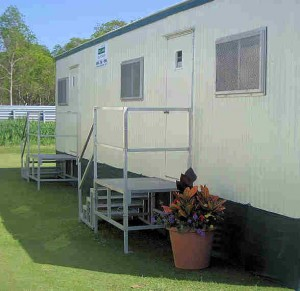 REDD Team’s aluminum stair systems are lighter than steel, arrive as modular kits, and bolt together easily. They require no field welding. That means they can easily be assembled during the night or on weekends.
Steel can absolutely be safe and compliant, but it’s heavier to handle, often needs hot work, and can stretch the install schedule by A LOT, especially around occupied entrances.
Durability & Maintenance
Aluminum doesn’t rust. Instead, it forms a protective oxide layer, so you’re not stuck in a repaint cycle every few years. For outdoor stairs, where rain, snow, and de-icing are routine, that’s a big operation win for aluminum and can’t be overlooked.
Steel is strong, but it relies on coatings. Once the coating chips away, then rust creeps in. With steel, you’ll need to budget for prep, primer, paint, and spot repairs continuously.
Winter Safety & Surface Performance
Both aluminum and steel can meet code, but the walking surface is where people feel the difference.
REDD Team’s aluminum treads and platforms use slip-resistant, self-draining profiles that move water off the surface and keep footing predictable in rain or after a snowfall.
However, with painted steel, traction often depends on grit paint or bolt-on plates. Yes, those are effective at first, but they eventually start to wear and need more costly upkeep.
Code Compliance Without the Guesswork
Public-facing stairs must follow building-code geometry (uniform risers/treads, compliant nosings, landings, and continuous handrails).
Employee-only stairs on rooftops or platforms fall under OSHA. At REDD Team, we design aluminum systems for both frameworks and pair them with coordinated ramps and platforms where the accessible route requires it. We ensure that the drawings you submit already match what reviewers expect.
Budget: First Cost vs Life-Cycle Cost
Steel sometimes looks cheaper up front, but add in the cost of fabrication, coating, heavier rigging, and future repainting, and it quickly becomes expensive.
Aluminum’s value shows up in lower installation labor and lower maintenance over time. Also, the ability to reconfigure and reuse components when entrances move or swing space changes is another huge budget perk that can’t be overlooked.
Sustainability & Reuse
Reusability matters. Aluminum stair modules can be relocated, expanded, or paired with ramps later, which keeps material out of the dumpster. Aluminum is also highly recyclable at the end of life.
How REDD Team Helps
Here are just a few perks of REDD Team’s aluminum systems:
- Modular aluminum stair families for public entries and OSHA service routes
- Slip-resistant, self-draining treads and platforms
- Continuous handrails with clean returns and compatible guard systems
- Code-aligned submittals that make reviews straightforward
- Matching ramps, walkways, and platforms so the whole access package looks like one system
The reason teams keep choosing aluminum is simple: fewer headaches now, fewer work orders later. And that’s the real takeaway when you’re comparing aluminum vs steel stairs for outdoor accessibility projects. Call REDD Team (800) 648-3696 or contact us online.