
Code-compliant accessibility systems for school districts in California need to meet federal and state accessibility standards and work on the campus, at building entrances, and for intended users. Aluminum ramps, stairs, platforms, and walkways can help districts install long-lasting accessibility ramps for permanent buildings, portable classrooms, athletic facilities, office buildings, and more.
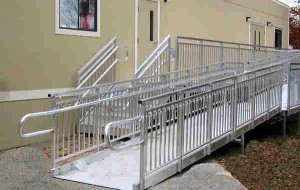
California schools must meet more than a basic ADA checklist. Districts need to account for current California Building Standards Code, Division of the State Architect, accessible-route continuity, structural safety, project-specific plan review, and more.
ADA Accessibility California Schools: Which Codes Apply?
School accessibility projects in California could fall under the Americans with Disabilities Act, California Building Code, and Division of the State Architect review. Each facility may involve different approvals based on funding, project size, and governing agencies.
The 2025 California Building Code went into effect January 1, 2026. Included are accessibility standards Chapter 11B for public buildings and facilities along with California-specific provisions not covered by federal law.
California Division of the State Architect (DSA) oversees design and construction for California’s public K–12 schools and California community colleges. DSA performs plan review to ensure applicable accessibility, structural safety, fire and life safety requirements are met.
Districts should work with qualified professionals and contractors. Architects, engineers, accessibility consultants, contractors, and plan reviewers all play a role. Installing an accessibility ramp without regard for its surroundings will not make the product ADA compliant.
ADA Accessibility California Schools: What Is an Accessible Route?
Accessible routes connect accessible parking spaces, drop-off areas, sidewalks, entrances, classrooms, restrooms, assembly spaces, and other destinations. Each part of the route needs to work together to keep the path of travel uninterrupted.
Accessible routes include level paths, ramps, curb ramps, elevators, or approved platform lifts. Stairs are allowed for general circulation but do not create an accessible path of travel for wheelchair users.
ADA standards set the minimum scope and technical requirements for accessible routes in public facilities owned by state and local governments. Schools in California must meet federal requirements along with applicable state code provisions.
ADA Accessibility California Schools: Features of Accessibility Ramps
School accessibility ramps should have the proper slope, clear width, landings, slip-resistant surfaces, handrails (if required), and more. Door swings and space needed to maneuver should also be considered.
Installers should view the ramp system as part of a larger route. Other things to consider include:
- Ground elevation to entrance height
- Ramp run and landing sizes
- Direction changes and turning clearance
- Handrail and edge protection details
- Door clearances and transition thresholds
- Drainage and slip resistance
- Connection to parking spaces and sidewalks
- Wheelchair and walker clearances
While ADA standards typically require 36” of clear width along a ramp run, California codes or egress might require more clear space for specific projects.
REDD Team designs access ramps for schools based on project geometry, landings, guardrails, and available space. The finalized design should comply with all requirements for that project.
Accessibility Systems for Portable Classrooms
Portable classrooms often sit above natural grade which requires ramps or stairs for access. The aluminum system should link the entrance to the accessible route while allowing door clearance and space for student circulation.
Some portable classrooms have limited space to navigate because of adjacent buildings, landscaping, utilities, fire-access lanes, and more. This could require the ramp to turn multiple times before reaching the proper elevation.
Modular classroom access steps and ramps from REDD Team can include platforms, landings, stairs, and grooved aluminum decking. Components can be adjusted or moved if classroom locations or entrance elevations change.
Portable classrooms do not automatically permit a temporary or improvised accessibility solution. Schools should follow the same level of planning for accessibility as other public areas.
Why Aluminum Accessibility Systems Are Practical for California Schools
Aluminum systems do not rust like untreated steel. It works on school projects because it’s corrosion-resistant, lightweight for installing and moving, noncombustible, and low maintenance.
Schools in California deal with marine air, rainfall, intense heat or sunshine, dust, irrigation runoff, and students. Slip-resistant, self-draining aluminum surfaces help limit buildup, but staff should still conduct regular inspections and cleaning.
Modular aluminum components can typically be prefabricated and assembled with mechanical fasteners. There may be less field welding, and districts might install accessibility during weekends, school recess, or phased construction.
REDD Team has wheelchair ramps for schools in various configurations to fit permanent buildings, portable classrooms, and other elevated entrances.
Avoiding Problems With Accessibility at School Districts
Facilities departments can avoid many accessibility problems by viewing the route as a single system. A ramp built to ADA standards does not correct an inaccessible doorway, obstructed landing, steep sidewalk, or door without clearance to open.
Inspect accessible routes to keep them free of obstacles. Trash containers, furniture, signs, bicycles, or maintenance equipment should not block the path of travel. Address drainage issues, loose fasteners, damaged rails, or transitions quickly.
Schools should reevaluate accessibility if portable classrooms, fencing, security, or landscaping change. An accessible route when installed may not remain accessible as the campus grows or changes.
Planning code-compliant accessibility systems for school districts in California? Contact the experts at REDD Team at 800-648-3696 or reach out online to discuss your project-specific aluminum access solution.