
Choosing between aluminum vs steel for stairs and ramps in commercial projects is not simply a matter of deciding which metal is stronger. Both can be engineered for demanding applications, but the materials behave differently once the stairs or ramps are delivered, installed, exposed to weather, maintained, and eventually modified.
For many commercial access projects, aluminum offers advantages that become more noticeable over the life of the system. REDD Team manufactures aluminum stairs, ramps, walkways, platforms, and other access products for commercial, industrial, educational, municipal, and modular building applications.
Is Aluminum Strong Enough for Commercial Stairs and Ramps?
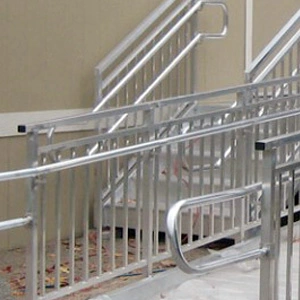
It is easy to associate heavier materials with greater strength, but weight alone does not determine whether an access system can handle its required loads.
Structural aluminum alloys can provide the strength necessary for commercial stairs, ramps, landings, and platforms when the system is properly engineered. REDD Team uses 6000-series aluminum alloys, including 6061-T6 structural components, in many of its access products.
The more important question is whether the completed system has been designed for its intended application, loading, and applicable code requirements.
Steel remains a strong structural material and is appropriate for many construction projects. Aluminum simply provides that structural capability at considerably less weight, which can make a major difference once installation begins.
How Much Lighter Is Aluminum Than Steel?
Aluminum has roughly one-third the density of steel. That difference is difficult to ignore when workers have to unload stair sections, position a landing, move ramp components, or transport materials into a tight construction site.
A lighter access system can simplify:
- Transportation
- Jobsite handling
- Placement
- Installation
- Relocation
- Reconfiguration
This becomes especially useful for portable classrooms, modular buildings, temporary offices, industrial facilities, and other sites where stairs or ramps may eventually need to move.
REDD Team aluminum ramps and stairs are also prefabricated, which reduces the amount of fabrication required after the components reach the site.
What If the Stairs or Ramp Need to Be Moved Later?
This is where the material decision can have consequences years after installation.
Not every commercial structure stays exactly the same. Portable buildings are relocated. Entrances are renovated. Equipment changes. A construction trailer moves to another jobsite. A heavy, permanently fabricated system can become difficult to adapt when those changes happen.
REDD Team aluminum systems are designed with relocation and reconfiguration in mind. Modular components can be especially valuable for portable classrooms, temporary facilities, modular buildings, and commercial properties where future changes are likely.
Instead of treating the access system as disposable whenever the building layout changes, the owner may be able to reuse the components in a different configuration.
Is Aluminum a Better Choice for Ramps?
Aluminum offers several characteristics that work particularly well for commercial ramp systems.
A ramp may require a substantial amount of material because of its length, intermediate landings, and handrails. Keeping the structure lighter simplifies transportation and installation while still allowing it to be engineered for commercial use. Corrosion resistance is equally important because ramps are frequently installed outdoors.
REDD Team aluminum ramp systems can also include slip-resistant walking surfaces and smooth, continuous handrails. Modular sections allow layouts to be adjusted for different elevations and available spaces.
For accessibility projects, the entire configuration must be planned around applicable requirements for slope, landings, clear width, handrails, and other design details.
What About Commercial Stair Systems?
The same material advantages apply to stairs. Aluminum stairs can provide a strong, comparatively lightweight route to commercial entrances, equipment, modular buildings, platforms, and elevated work areas.
REDD Team manufactures several types of aluminum stairs for different applications, including Universal Stairs, Dura-Grip stairs, OSHA stair systems, and crossover stairs.
Slip-resistant surfaces, handrails, adjustable configurations, and compatibility with other aluminum access components can be incorporated depending on the system.
That allows a facility to plan stairs as part of a broader access layout rather than treating them as an isolated structure.
Can Aluminum and Steel Both Meet Building Codes?
Material alone does not determine code compliance.
An aluminum stair that is improperly designed is not acceptable simply because it is made from aluminum, just as a steel stair is not automatically compliant because steel is strong.
The completed access system must meet the requirements that apply to its location and use.
Depending on the project, considerations may include stair width, riser height, tread depth, slope, landings, guardrails, handrails, structural loading, accessibility requirements, and walking surfaces.
REDD Team manufactures access products for applications governed by standards and codes that can include ADA, IBC, NFPA 101, OSHA, and other applicable requirements. Local requirements should always be confirmed for the specific project.
Is Aluminum or Steel Better for Custom Access Projects?
Either material can be fabricated into custom structures, but aluminum provides useful flexibility when the final system needs to remain lightweight.
Commercial sites frequently have conditions that make a standard stair or ramp difficult to use. There may be an existing sidewalk, utility line, building wall, HVAC unit, tank, parking area, or other obstacle in the way.
REDD Team offers custom engineering and design for access situations where standard configurations do not fit.
Aluminum can be fabricated into stairs, ramps, walkways, crossovers, platforms, and other structures while keeping the completed system comparatively easy to transport and install. That combination is particularly useful when a custom solution also needs to remain relocatable.
Which Material Should You Choose for a Commercial Project?
Steel still has an important place in commercial construction. There are projects where its particular structural characteristics, fabrication requirements, or integration with an existing steel structure make it the logical choice.
For standalone stairs, ramps, platforms, and modular access systems, however, aluminum offers a compelling combination.
It is strong, lightweight, naturally corrosion-resistant, low maintenance, and easier to handle than steel. It also works particularly well for prefabricated and modular systems that may eventually need to be reconfigured or relocated.
The best decision should consider the entire project rather than one characteristic of the metal.
Think about where the system will be installed, what weather it will experience, how often it will be used, how difficult the installation will be, what maintenance it may require, and whether the building layout could change later.
Where Can You Find Aluminum Stairs and Ramps for Commercial Projects?
The comparison of aluminum vs steel for stairs and ramps in commercial projects becomes clearer when you look beyond initial material cost. Weight, corrosion resistance, installation, ongoing maintenance, and future flexibility can all affect how well an access system works over its service life.
Planning stairs, ramps, or another commercial access system? Call REDD Team at (800) 648-3696 or contact us online to discuss your site, application, and access requirements.