
Aluminum bleacher access stairs & ramps for high school stadiums ensure people have dedicated paths of travel from ground-level walkways to raised seating areas. A thoughtfully planned access system can make crowds flow better, serve guests with varying abilities, and last for decades of outdoor service life at school athletic venues.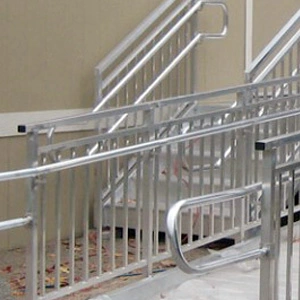
High school stadiums can accommodate football games, track and field competitions, soccer matches, marching-band contests, graduations, rallies, and other community gatherings. School bleacher access should account for weekday visitors, packed weekends, and everything in between rather than functioning as a simple residential staircase or entry.
Why Do High School Bleachers Need Dedicated Access Systems?
Simply put, high school bleachers need dedicated stairs and ramps to lead spectators toward uniform, convenient entrances and exits. Unsuitable access can force visitors to squeeze between seating rows, climb over structural supports, or crowd into tight aisles.
Setting aside bleacher access also helps facility administrators control crowds before games, during half-time, and immediately after events conclude. Removing ambiguity from entry and exit locations deters guests from taking unsafe shortcuts.
REDD Team’s aluminum bleacher access stair systems connect directly to spectator seating. Bleacher stairs and systems are built with wider walking surfaces, predictable rises, handrail support, and slip-resistant treads designed for heavier public usage.
What Is the Difference Between Bleacher Stairs and Ramps?
Bleacher stairs offer step access to spectators who are able to climb flights, while ramps provide an accessible path for wheelchair users, scooter riders, walkers, and individuals who use other mobility aids. Some stadiums need both bleacher stairs and access ramps to best serve their communities.
A staircase can usually access the seating deck from a smaller footprint. Conversely, ramp systems require additional length to achieve a gradual slope. Long ramp runs might also integrate directional changes and intermediate landings.
REDD Team’s custom bleacher access ramps are available in straight or multi-directional designs depending on the application. A ramp slope, landings, turning radius, surface traction, and connections to other ADA compliant pathways should be considered by the design team.
Stairs are never an acceptable substitute for an accessible ramp. Administrators should consider stairs, ramps, viewing platforms, parking layouts, entrances, restrooms, concession stands, and exterior pathways as parts of a single stadium facility.
Aluminum Bleacher Stair Features
Effective bleacher stairs provide stable footing, continuous handrails, level landings, and enough space to accommodate expected spectator traffic. Building professionals should design the system around the bleacher height, entry point location, and overall stadium layout.
Other factors to consider during the planning process include:
- Height of bleachers and seating capacity
- Width of stairs, depth of treads, and height of risers
- Placement of handrails, guardrails, and safety barriers
- Slip-resistant and self-draining stair surfaces
- Size of upper and lower landings
- Connections to existing bleacher decks
- Soil condition, drainage, and concrete anchors
- Nearby fencing, gates, sidewalks, streets, and emergency access
REDD Team has discovered that bleacher stair treads should always have slip-resistant surfaces and holes to allow water and debris to drain through instead of pooling. Wider stairs can also encourage better two-directional flow when crowds are moving simultaneously.
Why Is Aluminum Ideal for High School Stadiums?
Aluminum bleacher access stairs and ramps are ideal for high school stadium projects because they resist corrosion, are lightweight compared to some metals, strong, and engineered to tolerate outdoor elements. Aluminum won’t rust like carbon steel or degrade like wooden units.
Sports venues and outdoor bleachers expose access stairs and ramps to rain, snowfall, humidity, sunlight, dirt, spilled food and beverages, and changing temperatures. Aluminum building products reduce the need for annual scraping and refinishing associated with exterior steel stairs.
REDD Team also offers outdoor metal stairs for schools that can supplement athletic complexes, portable classrooms, new construction, and other campus projects. Aluminum access stairs and ramps can even be relocated or resized if the school requires something moveable.
What Maintenance Will Stairs and Ramps Require?
Aluminum bleacher stairs and ramps need fewer refinishing projects than painted steel systems, but they’re not maintenance free. Schools should conduct routine checks of stair treads, ramp surfaces, handrails, guardrails, landings, mountings, anchors, fasteners, and structural connections.
It’s also wise to look for changes around concrete foundations, soil conditions, and nearby drainage. Foundation erosion, ground settling, or pooling water can compromise an otherwise safe access feature.
Any defective or unstable conditions should be repaired or fixed before students, athletes, and guests start using the access system. Keeping a written record of inspection dates can help administrators identify recurring problems and schedule preventative maintenance between busy events.
Planning to install aluminum bleacher access stairs & ramps for high school stadiums? Let REDD Team Know at 800-648-3696 or contact us online.