
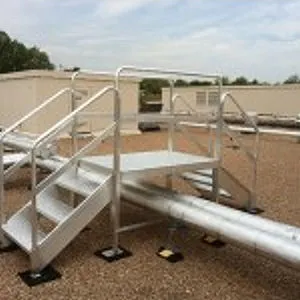
Commercial rooftops can house a variety of equipment needed to keep buildings running smoothly. HVAC units, conduit and ductwork lines, and rooftop pipes are common features found on industrial and commercial rooftops. Unfortunately, these essential components can also create obstacles that present hazards for maintenance teams and service personnel. That’s where OSHA-compliant industrial crossover stairs for safe access over rooftop pipes can help.
Working on rooftops without the right access systems often means employees will have to step over pipes, crawl around HVAC units, or traverse awkward routes that put them at greater risk for injuries. Industrial crossover stairs provide designated routes for safely crossing over rooftop obstacles. They help facilities support OSHA compliance standards while allowing employees and contractors to move around rooftops more efficiently.
Rooftop Access Safety Concerns
Commercial rooftops are far from inactive spaces. Maintenance employees need to access rooftops frequently to perform preventative inspections, repair equipment, service electrical components, and monitor mechanical equipment. Rooftop pipes create unique challenges because they often run perpendicular to natural walking paths, creating daily hazards for workers.
Stepping over piping may not initially seem like a cause for concern, but roofs are vulnerable places to fall. Once a worker loses their footing or balance, injury is imminent. Oil residue on shoes, slippery surfaces, poor lighting, and bulky tools can all contribute to rooftop accidents.
Industrial crossover stairs provide safe routes that enable rooftop employees to traverse over obstacles instead of working around them.
Hazards Employees Encounter on Rooftops
Commercial rooftops are rarely flat surfaces free of obstacles. Over time, buildings add new equipment to rooftops to support expanding operations. It’s not uncommon to see rooftops cluttered with pipes, conduit, ventilation systems, and utility lines.
These additional items can create trip and fall hazards for employees. Common rooftop hazards include:
- Stepping over piping
- Walking on slippery surfaces
- Tripping on uneven walking surfaces
- Poor visibility
- Crowded work areas
- Utility lines crossing walkways
These hazards become amplified if workers need to access the rooftop during inclement weather conditions or an emergency repair. Correcting a sudden roof leak may be manageable on a warm, sunny day but can be dangerous when the roof is wet or covered in ice.
Industrial crossover stairs provide stable platforms that keep employees dry and safely above rooftop hazards.
How Crossover Stairs Prevent Accidents
Industrial crossover stairs are designed to give workers a safe path to follow when crossing over rooftop pipes and equipment. Improvising travel routes every time an employee crosses the roof can be dangerous and leads to inconsistent worker behavior.
Crossover stairs are equipped with safety features like handrails, guardrails, slip-resistant steps, and secure landing platforms. Built correctly, these features make it easier for workers to follow safe walking routes, which reduces the chance for accidents.
Installing crossover stair systems also shows employees that you take rooftop safety seriously. When workers see a company has provided methods to travel safely around the roof, they will be more likely to follow designated pathways.
Safety Starts with OSHA Compliance
The Occupational Safety and Health Administration (OSHA) creates regulations that businesses should follow to minimize risks and keep workers safe. Rooftop access is no exception. Height elevates the risk for employees if they were to fall off the roof.
OSHA compliance means your crossover stair system was designed and built using safety guidelines set by your local regulatory authorities. These standards may include but are not limited to:
- Proper stair measurements
- Correct railing height
- Weight capacity
- Slip-resistant walking surfaces
Meeting OSHA standards helps keep workers safe, avoids fines due to citations, and can limit your liability should an accident occur.
Every rooftop has different equipment layouts and structural designs, so crossover stairs should be designed with your specific rooftop in mind. The height of your pipes, slope of your roof, desired traffic paths, and spacing of equipment are some important factors to consider when custom designing your crossover stair system.
Some systems are small and only need to be used for occasional equipment maintenance. Other systems can be large and may need to accommodate additional platforms and walkways. Customized crossover stair systems ensure the safety of your employees without hindering how your roof is used.
Industrial-grade materials are commonly used to manufacture crossover stair systems. Aluminum and galvanized steel are popular because they can withstand constant exposure to the elements. High-grade materials will resist rust and corrosion, provide years of reliability, and require less frequent replacement.
Businesses with high traffic on their rooftops should look for crossover stair systems that can withstand constant use. The last thing you want is a faulty access system that endangers employees because it wasn’t designed to handle heavy usage.
Another benefit of heavy-duty crossover stair systems is they help protect your equipment. Working around piping, electrical conduit, and HVAC equipment can cause significant damage if employees are forced to jump over these obstacles.
Crossover stairs eliminate unnecessary contact with equipment and provide workers with a safe pathway to traverse the roof.
Professional Installation is Key
Don’t make the mistake of thinking installing a crossover stair system is a DIY project. These systems should be installed by professional engineers to ensure your employees are safe when using them.
An experienced installation team will assess your rooftop traffic patterns, structural capabilities, pipe height clearance, and OSHA requirements before installing your crossover stair system. Properly installing your system is crucial to maintaining a safe working environment for employees.
Professional installers know how to integrate crossover stair systems into your existing rooftop and won’t disrupt drainage channels, equipment access paths, or future maintenance requirements.
Don’t wait for an accident to happen. Upgrade your rooftop access solutions by installing commercial crossover stairs today. Contact REDD Team at (800) 648-3696 or online to speak with a product specialist who can help you find the perfect solution for your facility.